LAPD set to deploy Axon license plate reader pilot after Flock exit
City Council approved the program despite opposition, as the department seeks new surveillance tools to replace cameras from a rival vendor.
By Andres Smirnov ·
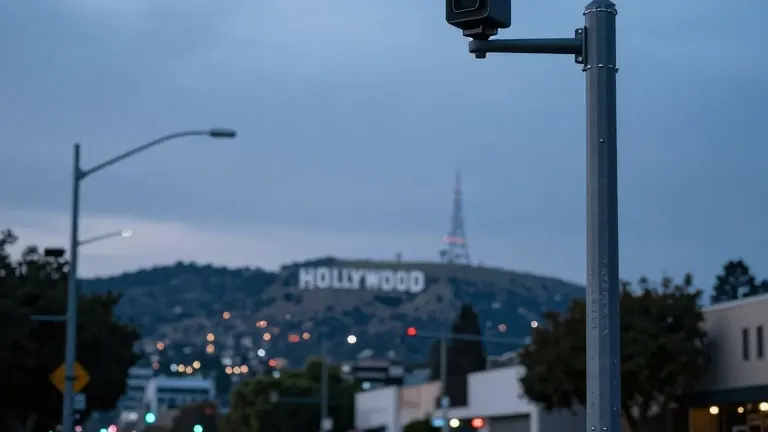
The Los Angeles Police Department is moving forward with a pilot program to install hundreds of license plate readers on streetlights across the city. The devices are manufactured by Axon Enterprise, a major supplier of police technology that has long provided the department with Tasers and body cameras. The rollout is expected to begin in the near future following a vote by the City Council earlier this week.
This development follows the LAPD’s decision to let its agreement with Flock Safety lapse earlier this year. City officials cited concerns that data from Flock cameras could be shared with federal immigration enforcement agencies. Axon stated that it will adhere to the department’s new data-sharing safeguards, which require senior leadership approval before data is shared with certain outside agencies.
The shift in vendors occurs as dozens of U.S. municipalities pause or end relationships with Flock Safety. Critics argue that Flock’s cameras constitute mass surveillance, and the company’s cameras are present in 6,000 communities across the nation. In response to backlash, Flock has announced changes to its data retention policies and search safeguards. Meanwhile, Axon has secured a $235 million contract with the LAPD for new hardware and AI software over the next decade.
City Council members debated the pilot program during a Tuesday meeting where scores of residents spoke against the expansion of cameras. Councilmember Hugo Soto-Martinez urged the department to allow for independent auditing of the technology. Councilmember Eunisses Hernandez expressed discomfort with using tools that could be utilized by a federal government she described as pushing the boundaries of power. Conversely, Councilmember Traci Park defended the technology, noting that plate reader data helped solve a drive-by shooting and identify suspects in ongoing home burglaries.
The program cleared the council without the two-thirds majority required to send it back to the Police Commission for reconsideration. A report from the LAPD inspector general’s office last month identified limitations in the department’s current agreements with three vendors, including Flock, Axon, and Motorola. The report noted a lack of clear language regarding data retention and sharing practices. Under the new policy, the LAPD will own all data and limit reader use to criminal investigations and missing persons cases.
Axon Chief Executive Rick Smith told investors on a recent earnings call that the company is seeing agencies convert from existing license plate readers to Axon systems. He attributed this shift to the company’s controls and privacy efforts. Joshua Reilly, a senior stock analyst at Needham & Co., noted that while Axon benefits from the anti-Flock sentiment, the broader backlash against plate reader technology has limited the company’s ability to fully capitalize on the market void.
The Stop LAPD Spying Coalition filed a lawsuit against Councilmember Traci Park on Monday. The group claims Park’s office refused to release information about dozens of Flock devices in her district. Public records show that Park has allocated more than $450,000 in discretionary funding to install over 100 plate scanners. Organizer Hamid Khan stated that swapping one vendor for another does not fix the underlying surveillance architecture.