Midterm vote counting timeline depends on state mail-in rules
With 435 House seats and 35 Senate seats in play, final tallies for key states like Alaska and Nevada may not be complete until days after polls close.
By Evelyn Ellis ·

Election night will reveal only the initial phase of a complex tallying process.
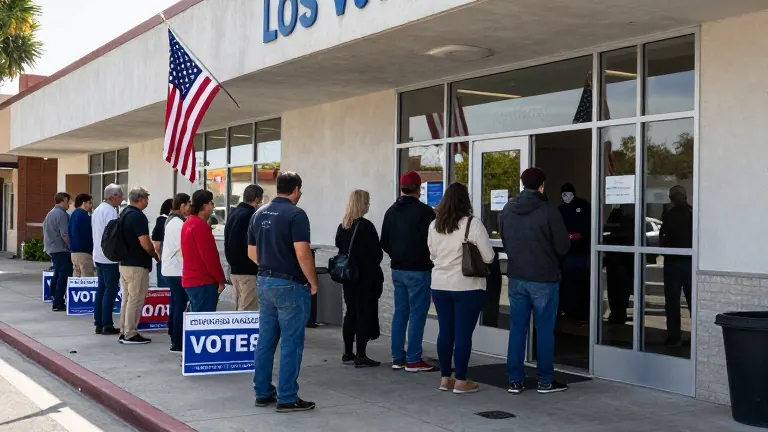
Voters in the United States are choosing all 435 members of the House of Representatives and 35 of the 100 Senate seats. Democrats seek to reclaim both chambers from President Donald Trump’s Republican Party. The first results will appear as polls close on the East Coast at 6 p.m. Eastern Standard Time. However, the final outcome for many races will depend on state-specific procedures for counting mail-in ballots and ranked-choice votes.
Polling places in parts of Indiana and Kentucky will close first. The last jurisdictions, including the western Aleutian Islands in Alaska, will not close until 1 a.m. Eastern Standard Time on Wednesday. States such as Alaska and Maine use ranked-choice voting, which requires additional counting rounds if no candidate achieves a majority. In Alaska, the next round of tabulation for a potential runoff is scheduled for November 18. Mail-in ballots in Nevada can arrive up to four days after Election Day, and voters there have six days to correct signature errors.
Historical data from the 2024 cycle provides a benchmark for how quickly results may emerge. In that election, approximately 99 percent of Florida’s votes were counted by 10:51 p.m. Eastern Standard Time. In Ohio, 90 percent of results were reported by 11:03 p.m. Eastern Standard Time. Conversely, it took eight days in 2024 to determine which party would control the House of Representatives. This delay was driven by slow counting in states like California, where elections are conducted primarily by mail. Large batches of ballots in California are often verified days after the polls close.
News organizations, including The Associated Press, analyze vote counts as they are released by local officials to call races. A race is typically called when one candidate has an insurmountable lead, even if some ballots remain uncounted. This means a winner can be declared before official certification is complete. Close races, however, may remain undecided for days or weeks. Recounts can be triggered automatically or by request in tight contests. Candidates also retain the option to challenge results in court, a process that can extend the timeline for final certification.
President Trump has expressed uncertainty about accepting the final outcome. When asked if he would respect the results, he stated, “I will if there are honest elections.” Democratic strategist Mali Smith noted that individual states administer and certify elections, and federal courts accept this state authority. The U.S. Constitution grants the House and Senate final authority to judge disputes regarding their own members. Depending on the nature of any legal challenges, the resolution process could take days, weeks, or longer.