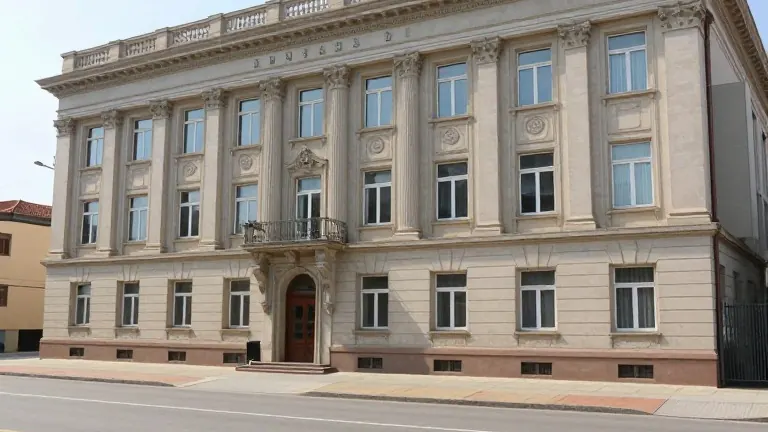
Parliament transfers 4 million records to National Archives after five-year project
The collection includes the 1605 Thanksgiving Act and a 348-meter land tax document, now available for public viewing at Kew.
By Evelyn Ellis ·
A five-year project to move parliamentary records to the National Archives in Kew, south-west London, has concluded.
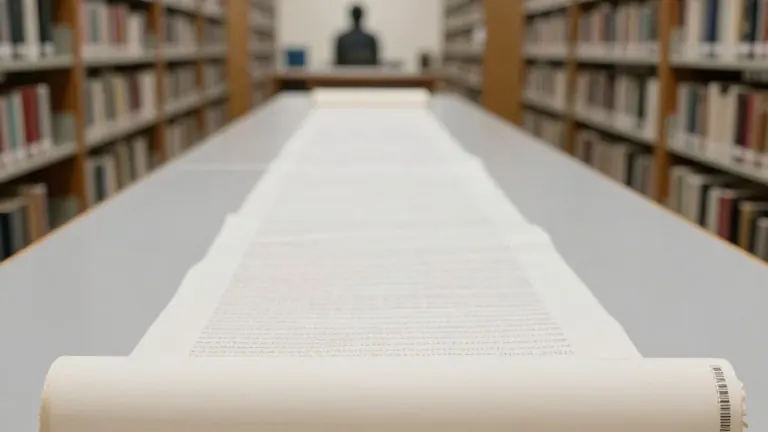
The transfer moved four million items from the Victoria Tower at the Palace of Westminster to the repository at Kew. This addition increased the total length of documents housed at the facility by 16.5 linear kilometres. The National Archives now holds a total of 20 million records, with one-third stored in deep storage at a facility in Cheshire. The new records are fully catalogued and marked with individual registration barcodes. They are available for the public to order and view for free.
The collection includes the 1605 Thanksgiving Act, which established the annual commemoration of the Gunpowder Plot. The act was passed by King James I following the failed assassination attempt by Guy Fawkes. The document directs that church services be held every November 5 to mark the event. Dr Graham Moore, an early modern parliament specialist at the National Archives, noted that such acts often begin with elaborate language. He pointed to a passage describing King James as enriched with plentiful progeny proceeding out of his royal loins. The archives also contain a well-preserved House of Commons journal from 1605. A handwritten margin entry dated November 5, 1605, records the search of the Palace of Westminster cellars and the discovery of 36 barrels of gunpowder alongside Guy Fawkes. Another scroll contains an Act of Attainder declaring the conspirators guilty of treason and sentencing them to be hanged, drawn, and quartered. Moore explained that these documents often show physical edits, such as stitched-on additions and cross-outs, resulting from debates.
The transfer also included non-documentary items. Among these are a suffragette’s banner from October 28, 1908, a piece of a gravestone, a sword, and a uniform. The suffragette banner was secretly brought into the Ladies’ Gallery of the Commons chamber. One woman dropped the banner into the chamber while two others chained themselves to the iron grille. They shouted that they had been behind the grille for too long. The grille had to be removed while the two women were still attached. The largest single document in the collection is the 1821 Land Tax Commissioners Act. It is inscribed on 757 vellum membranes and measures 348 meters in length. This length exceeds three football fields. The act nominates 65,000 commissioners to collect revenue based on land valuations. Dr Joe Cozens, a 19th century parliament records specialist, identified the Great Reform Act of 1832 as another key constitutional document. He stated that this act admitted middle-class men in borough towns to the franchise for the first time. This change marked the initial step toward modern democracy.
Saul Nassé, the chief executive of the National Archives, said the Palace of Westminster was not designed with modern preservation standards in mind. He stated that the archives lived at the Palace of Westminster for many decades but required a move for long-term preservation. With the addition of these records, the National Archives now holds documents from the judiciary, the government, and parliament. Nassé described this as a significant development given how the British state operates. He said the move offers the public more access than ever before. He added that there is no point in creating records and keeping them safe unless there is a way to bring them to life for people.