The 2,000-page giant that vanished from American doorsteps
Phone books, which started as a single page in 1878, became household staples before disappearing in the early 2000s.
By Bruno Morales ·
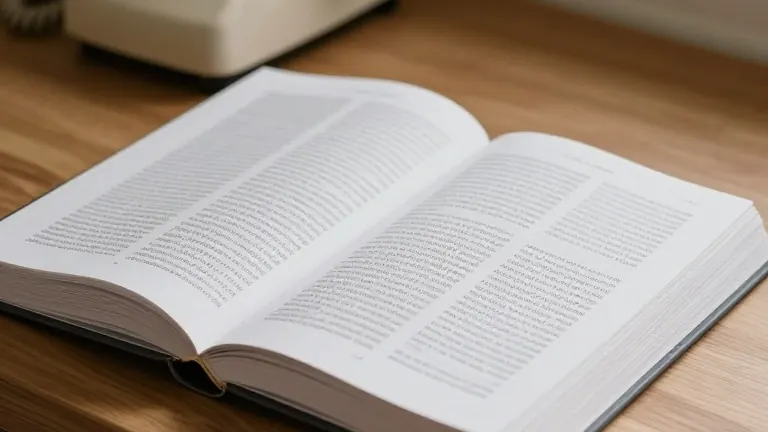
The telephone book has effectively vanished from American households, a disappearance that occurred quietly over a few years in the early 2000s. What began as a utilitarian object in the late 1900s is now largely a memory for those who grew up with them.
Kim Johnson Flodin, writing for the Associated Press, traces the object's journey from its inception to its quiet retirement. The first edition was a one-page list containing 50 subscribers in New Haven, Connecticut, in 1878. Decades later, the format evolved into a massive, sturdy volume delivered to doorsteps.
For Flodin, growing up in Los Angeles, the arrival of the book was an annual ritual. The first task was locating the family's own entry, a step that provided a sense of validation and connection to the millions of people in the city. The books also served practical, if odd, purposes. Flodin recalls sitting on a stack of them to reach the table during large family meals or teetering on a large edition to reach Ritz Crackers on a high kitchen shelf.
The volumes were also sources of mischief. Children used the listings to find celebrities and call them, or to locate crushes just to hang up. Some tried to identify the owner of the number 867-5309. Journalists relied on the White and Yellow pages as a primary research tool, a practice Flodin compares to a modern Nexis search.
The decline began in the 1900s as area codes became mandatory and cellular phones became common. The development of internet search engines further reduced the need for the physical book. Flodin notes that all the information previously held in the volumes is now accessible on mobile devices.
Flodin, who now lives in Chicago, reflects on how social habits have shifted. She recently met friends from home, one of whom spotted David Lee Roth in a Prius at a drugstore parking lot. In the era of the phone book, she might have found Roth's number in the directory. Instead, she shared the sighting with friends, demonstrating that while the tools change, the social connections remain.
The piece is part of a recurring series titled American Objects, which marks the 250th anniversary of the United States.