Los Angeles activates automated speed cameras with 11 mph threshold
The city's new pilot program issues civil penalties up to $500 for excessive speed, starting with mailed warnings in high-risk zones.
By Bruno Morales ·
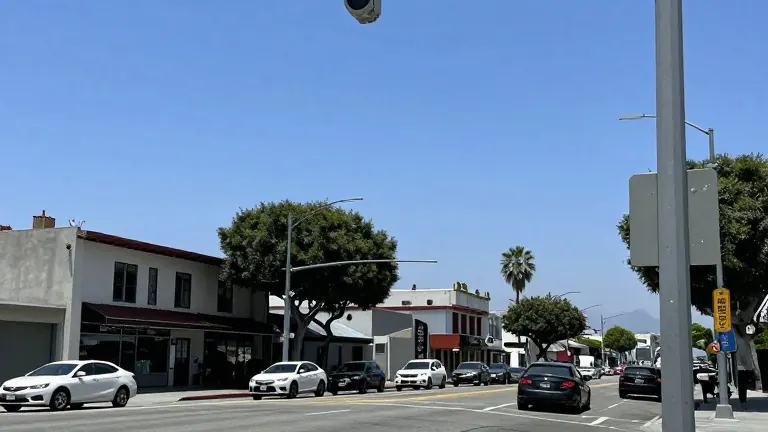
Los Angeles began operating automated speed cameras on Monday, marking the start of a strategy to reduce crashes on its most hazardous streets. City officials state that speeding is the primary cause of traffic collisions in the municipality. The new infrastructure targets specific intersections where vehicles frequently exceed the posted speed limit by a dangerous margin.
The system triggers when a vehicle travels at least 11 miles per hour above the posted speed limit. Cameras capture only the rear license plate, excluding the faces of drivers and passengers. The initial deployment covers four specific locations: La Brea Avenue and First Street, Fairfax Avenue and Clinton Street, Melrose Avenue and Hayworth Avenue, and La Cienega Boulevard and Pico Boulevard. These sites were chosen for their proximity to schools and their history of serious traffic incidents.
Before fines are enforced, the city will send warning letters to violators for a 60-day period. After this grace period, drivers exceeding the limit by 11 to 15 miles per hour will pay a $50 fine. Penalties increase with speed, reaching a maximum of $500 for the highest violations. These infractions are classified as civil penalties rather than standard traffic tickets, meaning no points are added to the driver's DMV record.
The city plans to install 125 cameras by the end of the year. The rollout is part of a five-year pilot program aimed at improving roadway safety. Local business owners have mixed reactions to the new technology. LaKayla Keenan, who owns a beauty salon near one of the active camera sites, noted that she regularly witnesses speeding and collisions.
Keenan expressed uncertainty about the immediate effectiveness of the system. "Maybe when people start to catch on to it, they might start slowing down," she said. The pilot program will continue through the next five years, with the goal of establishing a permanent safety measure for the city's busiest corridors.