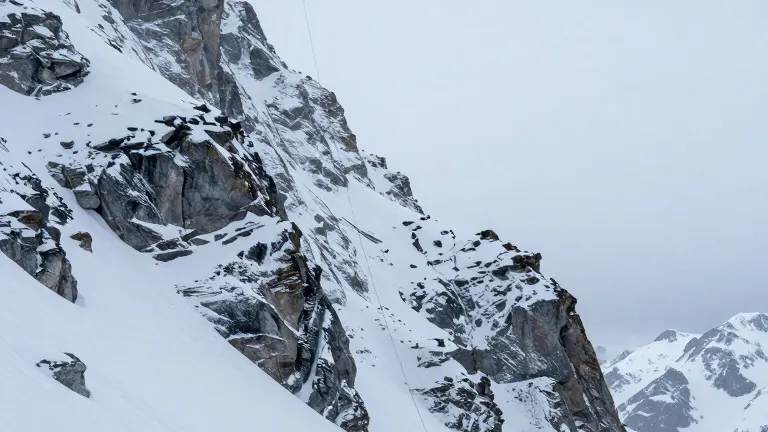
Slovenia Confirms Complete Loss of Triglav Glacier
New photography verifies the final ice patch on the nation's highest peak has disappeared following Europe's hottest summer on record.
By Bruno Morales ·
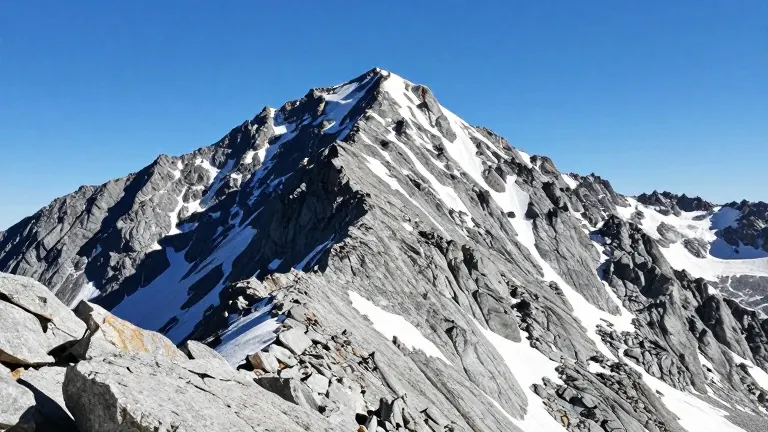
Slovenia has lost the last remnant of ice on its Triglav glacier, marking the end of a natural feature that once covered a large portion of the country's highest peak. The disappearance confirms a long trend of rapid alpine ice loss driven by record high temperatures across the continent this year.
The glacier’s decline has been severe and accelerating. Historical records indicate the ice field spanned approximately 40 hectares in the mid-1800s. By 1946, the first formal survey recorded an area of just 14 hectares. Between 1983 and 2003, the ice lost 93% of its surface area, shrinking to less than one hectare. Despite predictions of imminent disappearance, the remaining ice persisted for another two decades before melting into isolated pockets over the last five years.
Photographs taken this month before and after recent snowfall show no ice remaining on the mountainside. Matija Zorn, director of the Anton Melik Geographical Institute, noted that the glacier served as a primary data source for monitoring climate change. Zorn stated that while he expected the ice to diminish annually, the pace of loss was consistently surprising.
Zorn, who began measuring the site in 2001, described the physical changes he observed firsthand. He recalled taking an ice core sample that was five meters deep in 2002. The following year, he stood on the same location and found bare rock where ice had been. He described the melting process as incredible given the speed at which the ice retreated.
The loss of the Triglav glacier places it in a group of Alpine glaciers that scientists have termed moonlike due to the exposure of bare rock. In neighboring Switzerland, glaciologists reported that nearly a fifth of the country's ice volume vanished in the past five years. Swiss data specifically showed a 5.5% drop in volume in 2026. This trend aligns with Western Europe experiencing its hottest summer on record, which resulted in an estimated 50,000 heat-related deaths and caused widespread infrastructure and agricultural issues.
Triglav holds a specific cultural significance for Slovenians, serving as a standard mountaineering goal for citizens. While the main glacier has vanished, researchers have identified ice in caves beneath the peak that were exposed by the retreat. A second glacier on the Skuta mountain has also thinned but retains a shaded patch of ice, allowing it to persist for several more years compared to the now-gone Triglav formation.
Miha Pavšek, a glaciologist and mountain guide, described the scene as a visible change in nature that many people have not yet fully acknowledged. Pavšek, whose parents were photographed at the site in 1957, said the melting represents the loss of something humans previously considered permanent. He stated that the disappearance of the glacier feels like a personal loss, marking the end of an era for the local landscape.