New Mexico photographer documents ancient falconry traditions
Stefan Wachs captures the daily realities of Western falconers who rely on birds of prey to hunt in increasingly difficult conditions.
By Bruno Morales ·
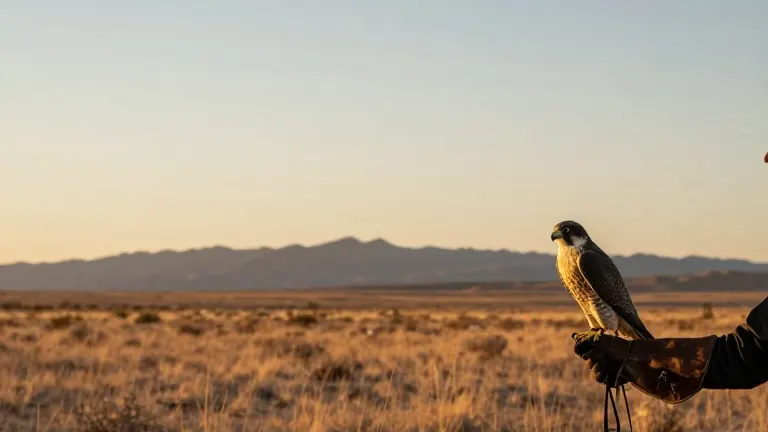
Stefan Wachs, a photographer based in New Mexico, recently documented the ancient practice of falconry in the American West.
Wachs learned of the craft while on assignment to capture images of the world's oldest form of hunting. He previously believed the practice was limited to the Middle East and Central Asia, unaware that it remained active in the region. The resulting photo series focuses on a small community of falconers, many of whom are also biologists or conservationists.
These practitioners possess an intimate knowledge of their local terrain. To successfully fly a falcon, they must track specific migration patterns for ducks and teal, as well as gathering spots for quail. They also monitor how environmental factors such as drought, pesticides, and development impact the birds. According to Wachs, most hunts conclude without a catch.
The relationship between the falconer and the bird requires precise management. The raptor must be maintained at a specific weight to fly effectively. The bird retains the ability to leave at any time and may not return. Wachs described the dynamic in the November 2026 issue of Deseret Magazine, stating that the falconer is "more at the mercy of the raptor" than the bird is of the human.
The collection of images includes shots of a peregrine in mid-flap against a dusk sky, an older falconer observing his bird, and a hawk poised to take flight over open plains. The work highlights the visual contrast between the harsh realities of predation and the aesthetic beauty of the birds. The feature appears in the current issue of Deseret Magazine under the title "Into thin air."