Senate passes energy permitting bill 62-33 after months of debate
The measure shortens federal review timelines for power projects and requires data centers to cover their energy costs before moving to the House.
By Evelyn Ellis ·
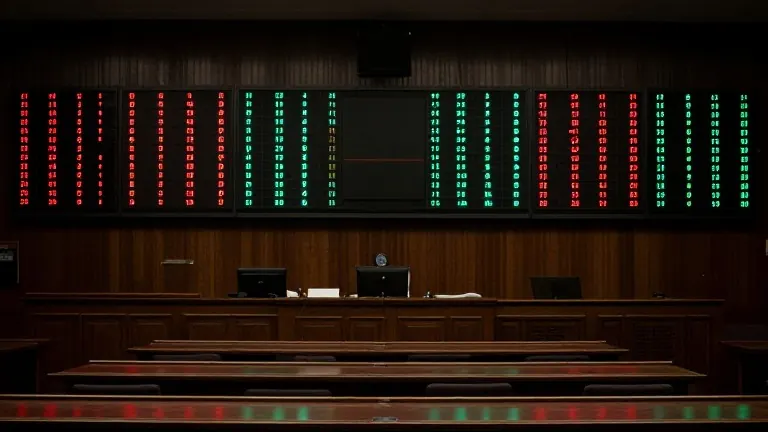
The U.S. Senate passed a bipartisan bill on Thursday that changes how federal agencies review energy infrastructure. The legislation, formally known as the Bipartisan American Affordability and Jobs Act of 2026, passed with a 62-33 vote. The primary goal is to reduce the time it takes to build power plants, transmission lines, and other energy facilities. The bill also mandates that data centers pay for the full cost of the electricity they consume.
The vote marks the first major legislative action by Congress since the midterm elections. Those elections resulted in a strong victory for Democrats and a repudiation of President Donald Trump and congressional Republicans. The bill now moves to the House of Representatives. The House approved a narrower, industry-friendly version of the legislation last year. The Senate version overhauls several environmental laws to streamline the approval process.
The path to the floor vote was contentious. Oregon Democratic Senators Jeff Merkley and Ron Wyden delayed the final vote this week to push for amendments. They sought to include a ban on data centers on public lands. They also wanted to block the administration from canceling clean energy grants for political reasons. Majority Republicans limited the number of amendments that could be voted on. The bill ultimately passed without the specific changes sought by Merkley and Wyden.
President Trump urged support for the measure in a recent social media post. He called it a big win for U.S. energy independence and dominance. He wrote that the bill would allow the country to build pipelines, mines, and power plants more quickly. He said this would lower energy costs for American families. The bill’s four main sponsors are Senate Energy and Environment committee leaders. They are Republican Senators Shelley Moore Capito of West Virginia and Mike Lee of Utah, and Democratic Senators Martin Heinrich of New Mexico and Sheldon Whitehouse of Rhode Island.
Industry groups support the bill. They argue that current infrastructure projects can take a decade or more to approve. Wyoming Senator John Barrasso, the No. 2 Republican in the Senate, said the current system keeps projects frozen for years. He stated that construction cannot start without spending years in a regulatory penalty box. He argued this drives up costs and creates uncertainty for developers.
Environmental organizations have criticized the measure. Jen Duggan, executive director of the Environmental Integrity Project, said the bill paves the way for more fossil fuel projects. She described it as a gift to major polluters. She noted that the bill was rushed through a lame-duck Congress without public hearings. The Sierra Club and National Wildlife Federation also oppose the bill. They cite concerns about limits on judicial review and changes to the National Environmental Policy Act.
The National Environmental Policy Act requires agencies to consider a project’s impacts and allows the public to be heard before approval. The current review process often takes five years or more. The bill seeks to shorten that timeframe. Maria Cantwell, a Democratic Senator from Washington, said the bill was rushed and its impacts are not fully considered. She met with tribal and conservation leaders on Tuesday. She warned that the bill could undermine tribal nations and weaken protections for water, land, and wildlife.
Jameson Wilson, vice chairman of the Oneida Nation, said the bill threatens the tribe’s ability to protect sacred spaces and culture. He said any effort to accelerate development must strengthen tribal sovereignty. Former Energy Secretary Jennifer Granholm said she believes recent changes strengthen protections for tribal consultation. She wrote that a bigger Democratic majority could write a stronger bill but that the current measure still needs the president’s signature.
Sheldon Whitehouse, a Democratic co-sponsor, called the bill the floor, not the ceiling, of climate aspirations. He said he hopes to accomplish big things with the new Democratic majorities over the next two years. Mike Lee, a Republican co-sponsor, said the group is going to make it easier to build in America again. He added that the goal is to make life more affordable for American families.
The Senate vote included 15 Democrats, including Minority Leader Chuck Schumer. Two Republicans, Josh Hawley of Missouri and Mike Rounds of South Dakota, voted no. Senator Alex Padilla of California voted no because he believed provisions would irreparably harm the state and its federally recognized tribes. The bill proceeds to the House, where members will consider the Senate version.