Tail parts found a mile away confirm Learjet broke apart before Florida crash
NTSB investigators are searching for a cockpit voice recorder to understand why pilots descended into a storm cell that killed all nine occupants.
By Andres Smirnov ·
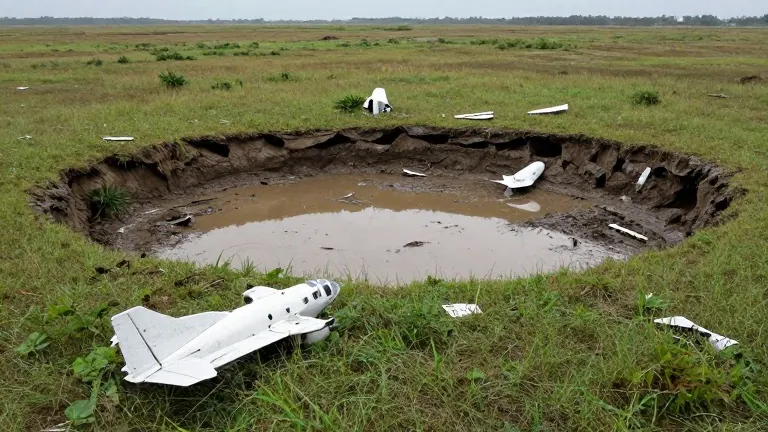
A business jet flying from Austin, Texas, to the Bahamas broke apart in midair before slamming into the ground in Florida, killing all nine people aboard. The National Transportation Safety Board confirmed the breakup occurred before impact after investigators located pieces of the tail elevator more than a mile from the main crash site.
The discovery of the elevator parts, which control the plane's pitch, provides concrete evidence that the aircraft was already disintegrating when it hit the ground. This finding directs the investigation toward structural failure or extreme aerodynamic forces experienced during the final moments of the flight.
Investigators are currently hunting for the cockpit voice recorder to determine exactly what the pilots said and did as conditions deteriorated. NTSB member Tom Chapman stated that the recorder would provide important data, though he noted the team can still determine how events transpired without it. The co-pilot had previously radioed air traffic control that the plane was being thrown up and down more than 700 feet and requested a different route.
Weather conditions are a primary focus of the inquiry. Flight path overlays show the Learjet flew directly into a small, rapidly developing red storm cell. The plane had been cruising at 41,000 feet before descending to approximately 35,000 feet as it approached the weather system. Retired airline pilot John Cox questioned the decision to descend, arguing that staying at the higher altitude would have offered a better view of the storm's top.
Heavy rains in Florida have complicated the recovery effort by filling the crash crater with water and potentially submerging wreckage. Investigators had to remove a utility pole near the site and are asking the public to report any plane parts they find. The NTSB plans to release a preliminary report describing the basic facts of the accident approximately 30 days after the crash. This initial document will not include a determination of cause or detailed analysis.
The agency will review maintenance records for the aircraft and interview staff from Upper Jets, the operator of the flight. Investigators will also consult with the National Weather Service and the Federal Aviation Administration to reconstruct the atmospheric conditions at 35,000 feet. Surveillance footage and videos taken by bystanders are being collected to fill gaps in the timeline.
A full investigation typically takes between 12 and 18 months, though complex cases can last longer. The NTSB currently handles more than 1,200 active investigations with a workforce of roughly 400. Once the final report is complete, it will identify probable causes and recommend safety changes. The agency recommends these changes but relies on the FAA, industry groups, and Congress to implement them.