US GDP Grows at 3.4% as Inflation Hits 3.7% Ahead of Midterms
Government data released this week shows accelerating economic expansion despite rising fuel costs and softening hiring trends.
By Evelyn Ellis ·
Consumer sentiment has fallen to the second-lowest level recorded in the 74-year history of the University of Michigan survey, a sharp drop that coincides with accelerating economic growth. The federal government released the final major economic datasets before the November 3 midterm elections, providing voters with the official figures for the current fiscal year. These numbers reveal a split picture: the gross domestic product is expanding at a rapid rate, yet household budgets are tightening under the weight of persistent inflation.
The U.S. economy expanded at an annualized rate of 3.4% over the three months ending in September. This represents an acceleration from the 2.2% and 2.5% growth rates recorded in the previous two quarters, according to U.S. Commerce Department data. A surge in artificial intelligence spending has contributed to this momentum. J.P. Morgan Asset Management reported that the AI sector added 0.56 percentage points to GDP growth in the first two quarters of the year, accounting for more than 20% of total economic expansion.
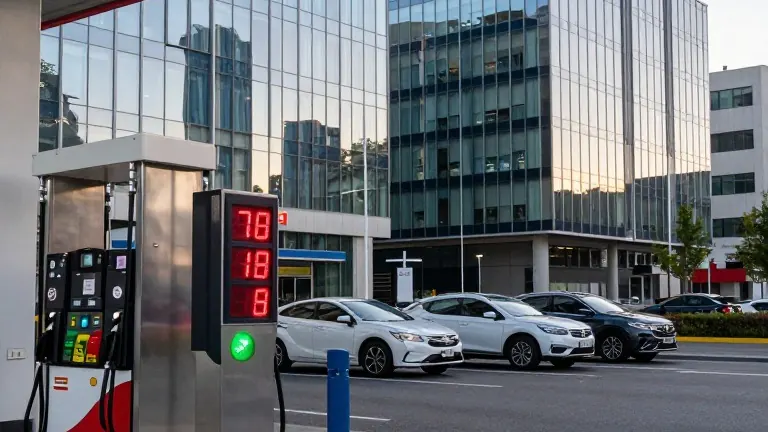
Prices, however, continue to climb faster than wages. Inflation rose at an annual rate of 3.7% in September, a figure more than one percentage point above the Federal Reserve's 2% target. Wages began to lag behind price increases in April, eroding the purchasing power of workers' take-home pay. The cost of fuel has driven a large portion of this price increase. The average price for a gallon of regular unleaded gasoline stood at $4.22 on Thursday, which is $1.19 higher than the price at this time last year. Diesel fuel costs have also risen, averaging $6.33 per gallon, an increase of $2.65 from the previous year.
Voters are feeling the squeeze in their daily purchases. A recent ABC News/Washington Post/Ipsos poll found that at least half of Americans describe every measured household purchase category as unaffordable. Gasoline prices have seen the sharpest shift in public perception. Seventy-one percent of respondents now call gasoline unaffordable, up from 28 percent in February, before the war in Iran drove up fuel costs. The University of Michigan survey indicates that shoppers expect inflation to rise even further over the next year.
The labor market shows signs of volatility despite consistent low unemployment. The U.S. added an average of 68,000 jobs per month during the first nine months of the year, a notable increase from the average of 10,000 jobs added monthly in 2025. However, monthly job gains have fluctuated widely. Employers added 133,000 jobs in August, following a loss of 10,000 jobs in July. Hiring slowed again in September, with only 29,000 jobs added according to the Bureau of Labor Statistics.
President Donald Trump addressed the economic conditions during a rally in Corinth, Mississippi, on Monday. He described the U.S. economy as experiencing "unbelievable growth, the biggest growth in the history of our country." Acknowledging the rise in oil prices, Trump stated that the war with Iran was worth it to prevent Iran from acquiring a nuclear weapon. He said, "I don't want to belittle it because it's a big thing but I thought the price of oil was going to go much, much higher and I was fully prepared to do it."
The unemployment rate has remained stable at 4.4 percent or lower since 2017, excluding the pandemic years of 2020 and 2021. This consistent low rate provides a backdrop to the fluctuating job growth numbers released by the federal government.
More Business · Bad Service · Report a business · Got a Story?