Debris hits Saudi financial tower as tankers burn in Hormuz
The Saudi-led coalition confirmed a Houthi missile strike on Riyadh while Iran reported two supertankers struck by mines in the Strait of Hormuz.
By Bruno Morales ·
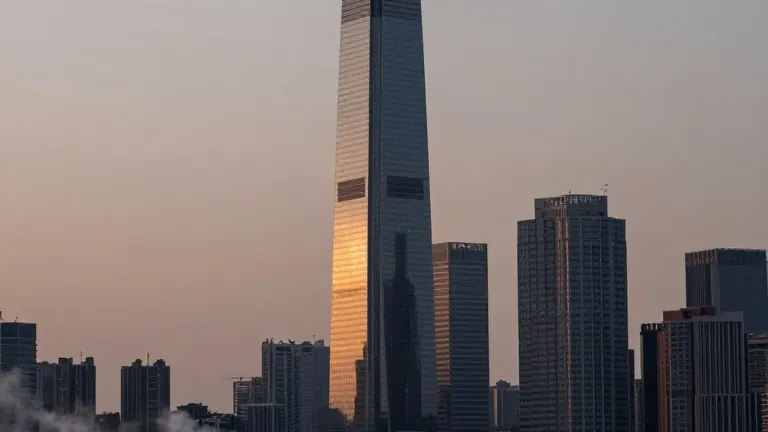
Debris from a Houthi missile fell on the Saudi capital on Thursday, causing visible damage to the Public Investment Fund Tower in Riyadh’s financial district. A witness, speaking on condition of anonymity due to safety concerns, described the impact on one of the city’s tallest buildings. The Saudi-led coalition stated that the debris came from a “missile threat” fired by Yemen’s Iran-backed rebels. Residents in the capital reported hearing a loud explosion after authorities issued warnings of incoming fire.
The Houthis had not immediately claimed responsibility for the specific strike on Thursday. However, the rebel group has targeted Riyadh and its financial sector repeatedly over the past few weeks, including an attack on Wednesday. Houthi media outlets reported strikes on Sanaa, the rebel-held capital in Yemen, early Thursday. The coalition also said it intercepted and destroyed missiles in the southern region overnight. Alerts were issued in several areas to warn of potential threats.
This is not the first time the financial district has been hit this month. Saudi officials previously stated that debris from an earlier attack damaged a building belonging to the state-owned oil company Aramco. The attacks on Riyadh follow major airstrikes by the kingdom on Houthi-held territory in Yemen earlier this week. Saudi officials told allies that the conflict with the Houthis could last another six months after Iran widened its attacks on Gulf Arab neighbors on Wednesday.
In the Strait of Hormuz, Iran’s Revolutionary Guard announced that two supertankers caught fire after striking mines. According to a statement on Iran’s state broadcaster, the vessels were carrying over 4 million barrels of crude oil. The Guard said the tankers were transiting the southern side of the strait under the protection of U.S. fighter jets and surveillance drones. It described their route as unauthorized. U.S. Central Command did not immediately comment on the incident, and the claims have not been independently verified.
Iran continues to warn ships not to pass through the strategic shipping lane without approval from Tehran. On Thursday, it reiterated that warning, stating that tankers cooperating with the U.S. military will be “dealt with decisively.” The strait remains a critical chokepoint for global energy supplies, with the conflict intensifying pressure on shipping lanes.
Crude oil shipments through the Strait of Hormuz have declined since the start of November. Preliminary figures from marine data firm Kpler show flows down to 8.5 million barrels a day through Monday. This represents half of the prewar levels recorded at the start of the month. Kpler noted in a media briefing on Wednesday that these numbers could rise in coming days.
Total oil shipments out of the Middle East by all available routes amounted to 15 million barrels a day in the same period. This figure represents about 64% of prewar flows, down from 97% in October. The routes include a U.S.-protected tanker path along the coast of Oman and pipelines that bypass the strait. Despite the uncertainty, a substantial amount of Mideast crude continues to reach the global economy.
Oil prices have fallen following a report from the International Energy Agency on Friday. The agency expects the global oil market to be oversupplied in the current quarter for the first time since the start of the Iran war. It cited continuing Mideast supplies and falling demand as primary factors. Tanker operators willing to risk the U.S. route transit the strait at night with radio location systems and mobile phones turned off to avoid detection. They transfer oil to other tankers waiting in the Gulf of Oman, which then ship it to customers in Asia.
The current method of keeping oil flowing has come at enormous cost due to skyrocketing rates for chartering tankers. Shipments of other key energy products, including liquefied natural gas and diesel, remain well below prewar levels. The situation illustrates the complex logistics required to maintain supply chains amid ongoing military threats in the region.