Saudi-backed troops reinforce Aden defenses as Houthi strikes kill seven in Hodeida
Iraq resumes oil exports to Turkey at 120,000 barrels per day while maritime attacks continue in the Strait of Hormuz.
By Evelyn Ellis ·
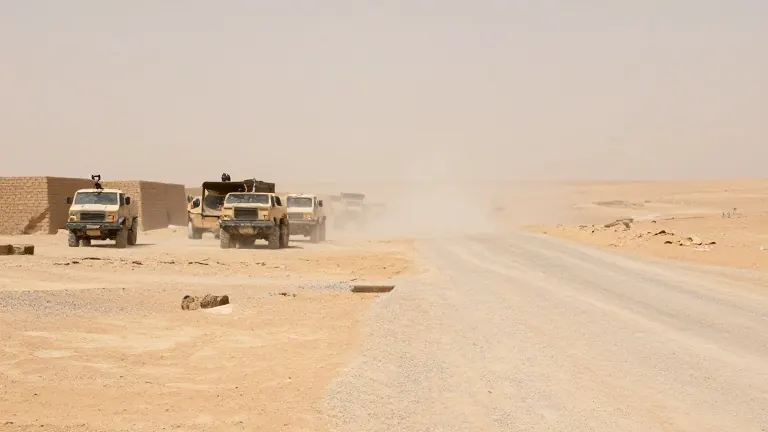
Saudi-backed forces in Yemen deployed additional troops and equipment to Tur al-Baha on Tuesday, a district 85 kilometers from the port city of Aden. Two Yemeni military officials, who spoke on condition of anonymity, stated the move aims to deter a major offensive by Iran-backed Houthi rebels. The Houthis have attempted to seize the district for weeks, which serves as the first line of defense for Aden.
The conflict in the region intensified as Houthi health spokesman Anees al-Asbahi reported that a Saudi airstrike on a sponge factory in Hodeida killed at least seven people and wounded nine. Al-Asbahi indicated the death toll could rise. Saudi Arabia did not immediately comment on the claim. The rebels also reported strikes in the northern province of Saada, the capital Sanaa, and the Wadi Al Gabara area, resulting in additional casualties.
The Institute for the Study of War said the Saudi-backed forces’ recent withdrawal from areas along the Bab el-Mandeb Strait was only a temporary measure to prevent encirclement. The think tank argued the pullback has not fixed underlying vulnerabilities, including fragmentation and poor coordination. This maneuver allowed the Houthis to consolidate their control over the key Red Sea strait, a critical route for global shipping.
In a related economic development, Iraq resumed pumping oil to Turkey through a pipeline at an initial capacity of 120,000 barrels per day, according to Oil Minister Bassem Mohammed Khudair al-Abadi. State media reported that the export volume will gradually increase to 500,000 barrels per day. The pipeline, which has been largely idle since 2023 due to legal disputes, is central to Iraq’s strategy to strengthen its export infrastructure following disruptions caused by the U.S.-Iran war.
Maritime security remains precarious. The United Kingdom Maritime Trade Organization reported that a tanker was attacked in the Strait of Hormuz north of Oman, igniting a fire in the engine room. Simultaneously, a cargo ship off the coast of Yemen repelled an attempt by armed men in a skiff to board the vessel. Prior to the start of the U.S. war with Iran on Feb. 28, a fifth of the world’s gas and oil transited this waterway.
Diplomatic efforts to de-escalate tensions between the U.S. and Iran continue, according to Majed Al Ansari, the spokesperson for Qatar’s Foreign Ministry. Al Ansari said a meeting with the Iranian side was scheduled for later in the day to discuss proposals. He warned that any escalation on the ground poses an extremely grave danger to the prospects of an agreement. U.S. President Donald Trump said Iran would pay a historic price if it follows through on threats against the American capital.
In Turkey, Foreign Minister Hakan Fidan stated that his country, along with Pakistan and Saudi Arabia, would welcome additional members to their defense pact once institutional structures are fully formed. Fidan made the remark during a joint news conference with Syrian Foreign Minister Asaad al-Shibani. The Mecca Joint Defense Agreement, signed in August, commits the three nations to treat an attack on one as an attack on all.
The United Nations human rights office documented 2,230 civilian deaths in Sudan’s war through the end of October, with more than two-thirds caused by drone strikes. Li Fung, who heads the office’s Sudan team, said drone use has become the defining feature of the conflict between the military and the paramilitary Rapid Support Forces. The war, now in its fourth year, has displaced around 13 million people and pushed parts of the country into famine.
In the West Bank, a 72-year-old Palestinian woman was fatally shot during clashes between Palestinians and Israeli settlers on the outskirts of Jericho. The incident occurred as the U.K. imposed sanctions on Israeli companies involved in settlement expansion and the activist group Tzvav 9. Israeli Foreign Minister Gideon Sa’ar called the British move a hostile act targeting private, law-abiding companies.
The Houthis have repeatedly stated they will not attack Aden, a position that has held despite their advance in other areas. A rebel spokesman did not respond to calls seeking comment on the recent deployment of Saudi-backed forces. The situation in Tur al-Baha remains a focal point for regional observers watching for signs of a broader Houthi push toward the southern port.