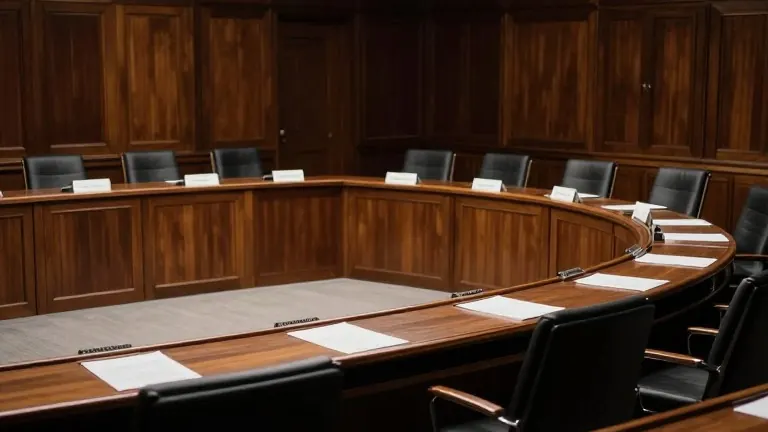
Eisenkot Faces 28-Day Deadline to Form Government as Israel Swears In New Knesset
President Isaac Herzog will address the 120-member legislature at 4pm on Tuesday, marking the start of a tight window for opposition leader Gadi Eisenkot to secure 61 votes.
By Andres Smirnov ·
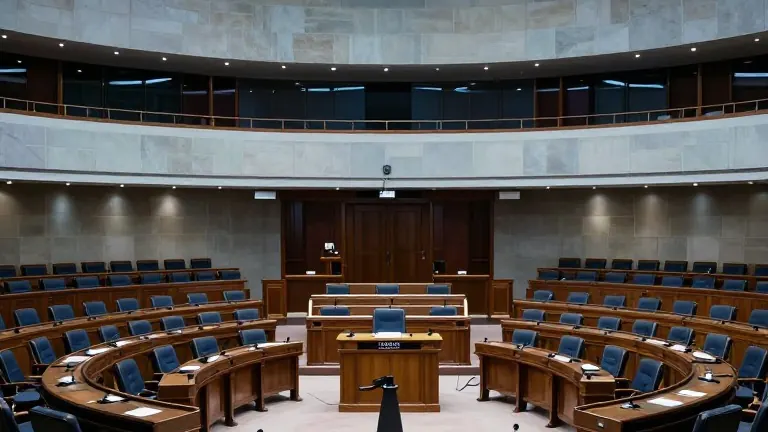
Israel’s 120-seat parliament is scheduled to be sworn in on Tuesday, November 10, initiating a critical political deadline for opposition leader Gadi Eisenkot. President Isaac Herzog will address the newly inaugurated legislature at 4pm local time, or 14:00 GMT. The ceremony marks the formal start of the term following an election that produced no clear majority for either Eisenkot’s camp or Prime Minister Benjamin Netanyahu’s right-wing bloc.
Herzog granted Eisenkot the initial mandate to assemble a government on Sunday. Eisenkot has 28 days to form a coalition, with the possibility of a single 14-day extension. To take office, his faction requires the approval of 61 lawmakers. His core opposition bloc currently holds 48 seats, a number that falls short of the required majority and places it behind Netanyahu’s bloc in total representation.
In preparation for the opening session, Eisenkot’s Yashar party identified candidates for key parliamentary roles. Matan Kahana, a former senior military officer, will be proposed as the speaker of the house. The party also nominated Avigdor Lieberman, a right-wing opposition leader, to chair the foreign affairs and defence committee. Lieberman’s support is viewed as essential in determining the final composition of the government.
Securing the speakership requires Eisenkot’s candidate to receive more votes than any nominee backed by Netanyahu’s bloc. Netanyahu’s camp has attempted to delay the vote. Opposition members aim to use their parliamentary presence to advance specific agendas, including the establishment of a commission to investigate the security failures that preceded the Hamas attack on October 7, 2023. That attack remains the deadliest day in the country’s history.
Eisenkot faces a difficult mathematical puzzle regarding how to reach the 61-vote threshold. One potential path involves the 19 Arab-Israeli lawmakers, who hold a record number of seats following strong performance in the recent election. Their support could provide the necessary numbers, either through formal coalition participation or by voting to approve the government from the opposition benches.
Lieberman has stated that he will not accept a government formed primarily on Arab-Israeli support. He advocates instead for an alliance with the ultra-Orthodox parties, which hold 13 seats. These parties have traditionally aligned with Netanyahu. Their defection would bring Eisenkot’s bloc to the required majority, though such an arrangement would likely be unstable. Netanyahu supported the military service exemption for these groups but did not fully codify it in law.
Arab-Israeli lawmakers are expected to oppose a major new offensive in Gaza under Eisenkot’s leadership. Eisenkot has generally backed Netanyahu’s wartime decisions, while committing to action against extremist settlers in the West Bank who have attacked Palestinians and stolen property with limited accountability.
More Politics · World news · Report a business · Got a Story?