King Abdullah pledges hardline response after Karak church attack
The Jordanian monarch opened parliament by vowing to strike terrorists with an iron fist and warned that Israeli expansion remains the region's primary threat.
By Andres Smirnov ·
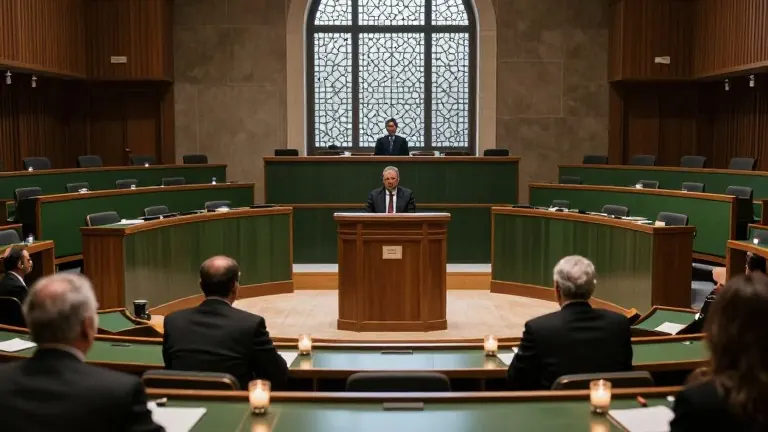
Jordan’s King Abdullah II declared that the kingdom would not be shaken by the recent deadly assault on a church in the southern city of Karak. He made the statement on Monday while opening a new session of parliament in the capital, Amman.
The attack occurred approximately two weeks ago and resulted in nine deaths, with dozens of others wounded. The king asked lawmakers to observe a minute of silence for the victims, whose relatives were present in the chamber during the address.
Abdullah identified the attackers as outsiders, stating that they were not of Jordan and had no place among the people. He characterized the incident as a test of the state’s resilience and the resolve of its citizens against the treacherous hand of terrorism.
The monarch outlined a strategy to confront terrorism and extremism by relying first on national unity and public awareness. He noted that this approach would be backed by the army and security services, which he said would strike with an iron fist. This method prioritizes domestic cohesion before employing military force.
Abdullah also addressed regional tensions, identifying Israeli expansionism as the greatest threat to the Middle East’s security and future. He pointed to the continuing humanitarian catastrophe in Gaza and persistent assaults in the West Bank and Jerusalem as evidence of this threat. Jordan, a close ally of the United States, signed a peace treaty with Israel in 1994, and millions of its citizens are of Palestinian origin.
The king pledged to protect the nation’s scarce water supplies, warning that the thirst of Jordanians would not be held hostage by any party. This comment reflected concerns that Israeli projects threaten the kingdom’s water security. He further directed lawmakers to view debate as a strength provided it serves the national interest, while urging the government to improve living conditions.
Abdullah warned officials against abusing their positions, declaring that the law recognizes no name, position, or influence. He emphasized that parliament remains the source of authority and that differences of opinion are valuable as long as Jordan’s interest is the goal.