LA Mayoral Vote Tightens to Deadlock
New polling data shows incumbent Karen Bass and challenger Nithya Raman tied at 40 percent support with fewer than 20 percent of voters undecided.
By Bruno Morales ·
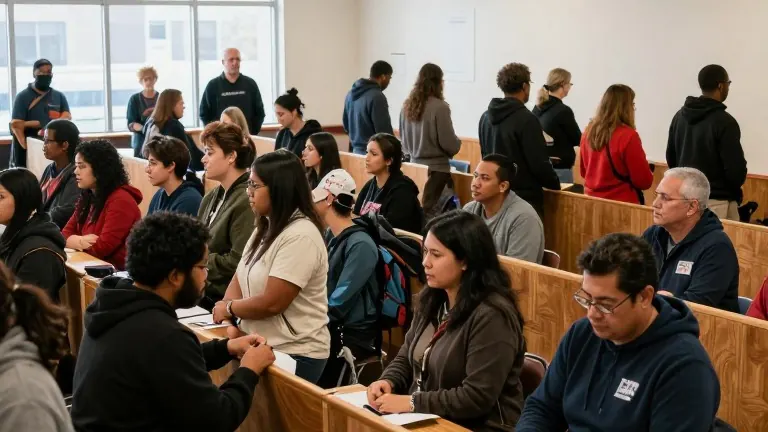
The race for the Los Angeles mayoralty ends Tuesday as voters decide between the incumbent and a former ally who is now her fiercest rival.
A poll from the UC Berkeley Institute of Governmental Studies, released Wednesday, places both candidates at 40 percent support among likely voters. Nineteen percent of respondents said they had not yet decided how to vote. The survey was co-sponsored by the Los Angeles Times.
The results mark a sharp shift in momentum for incumbent Karen Bass. A September poll from the same institute showed challenger Nithya Raman leading by 11 percentage points, with 39 percent support compared to Bass’s 28 percent. Bass is seeking a second term as mayor of the second-largest city in the United States.
In recent weeks, Bass and independent political action committees have intensified attacks on Raman. Critics have focused on public safety and questioned Raman’s experience. They specifically targeted her previous call to remove Police Chief Jim McDonnell. Opponents portrayed the councilwoman as unprepared to manage a city of her size.
Scrutiny increased in early October after Raman’s campaign shared a video featuring her with a leftist influencer. In the clip, Raman urged viewers to stop fascist liars, followed by images of Bass and McDonnell. Bass pressed Raman on the video during a televised debate. Tensions rose further when Raman described the LAPD as holding a gold standard under former Chief Daryl Gates.
Gates oversaw the department during the 1991 beating and arrest of Rodney King. Public outcry led to calls for his resignation, which he initially refused. He announced his intent to step down in July 1991 but remained in office until June 1992. He was replaced by Willie Williams. The 1992 riots began on April 29 after four officers were acquitted of beating King and ended six days later with the arrival of National Guard and federal troops.
Bass accused Raman of being an outsider who did not understand the city’s history. Raman explained that she referenced Special Order 40, a directive implemented under Gates that limits police cooperation with immigration enforcement. She later apologized for the comment.
Raman argues that the city is broken under Bass’s leadership. She criticized the mayor for pursuing expensive contracts, including a billion-dollar agreement to raise police salaries and a costly modernization of the downtown convention center. Raman has outlined plans to improve basic services, increase housing production, lower living costs, and support the entertainment industry.
Bass is asking voters for four more years to continue work on homelessness, housing affordability, and public safety. Her campaign has adopted aggressive tactics, with Bass calling Raman not ready for prime time. The two candidates have debated homelessness, safety, and housing while courting undecided voters.
Demographic breakdowns from the Berkeley poll show distinct advantages for each candidate. Raman received more support from younger voters and the Democratic Socialists of America local chapter. In the June election, Raman overtook Spencer Pratt to advance to the November runoff. Bass drew stronger support from older residents and those who backed Pratt in June. Both campaigns are currently competing for Black and Latino voters as Election Day arrives.