G20 Diplomats Skip Group Photo Over Lavrov
U.S. Secretary of State Marco Rubio canceled the event after European officials threatened to walk out rather than pose with Russia's foreign minister.
By Bruno Morales ·
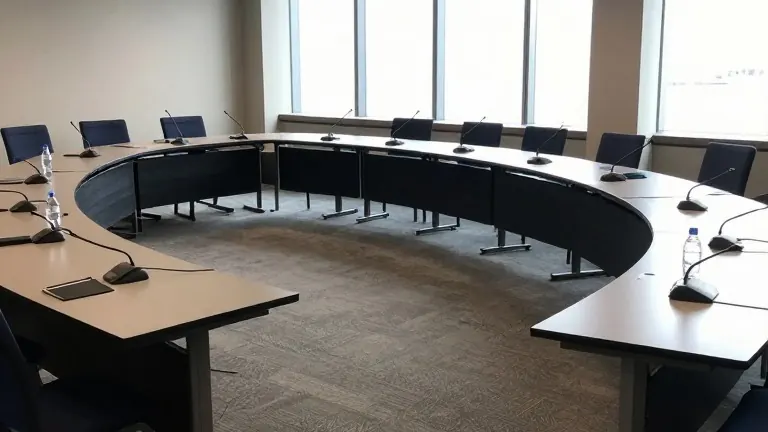
U.S. Secretary of State Marco Rubio called off the traditional group photograph for foreign ministers of the Group of 20 on Friday after several European diplomats refused to pose alongside Russian Foreign Minister Sergey Lavrov. Two U.S. officials, speaking on condition of anonymity, said Rubio scrapped the photo because the dispute would distract from the talks.
The gathering in Atlanta is a precursor to a leaders' summit President Donald Trump will host at his Miami golf club in December. Ukraine was not invited this year; U.S. officials said they limited attendance to formal G20 members. South Africa, the group's only African founding member, was also left off the list while it is in disputes with the Trump administration.
The decision to cancel the photo came together quickly on Friday morning. Lavrov arrived in Atlanta after visa complications for his Russian delegation were resolved at the last minute, Russian foreign ministry spokeswoman Maria Zakharova said. European officials then raised objections to standing in a group picture with him, and some threatened to leave the session. Rubio canceled the photograph rather than proceed.
Lavrov has traveled rarely to NATO countries since Russia invaded Ukraine in February 2022 and sanctions followed. Ian Kelly, who served as U.S. ambassador to Georgia during Trump's first term and now teaches at Northwestern University, said the invitation was a mistake. "It seems politically boneheaded to invite him," Kelly said. He added that Lavrov's presence would weaken any unified Western message on the war in Ukraine.
Polish Deputy Prime Minister and Foreign Minister Radosław Sikorski called the cancellation "the right decision." He told reporters in Atlanta, "I am not the only one who does not want to be photographed with Lavrov." German Foreign Minister Johann Wadephul said "there is no normality with Russia" but added that "we must exchange the controversies at the table here," the German news agency dpa reported.
Rubio opened the talks without addressing the photo dispute. He said he hoped for "a productive meeting" and described the period as "a critical moment." He cited "a series of interconnected economic and geopolitical crises" and said many of them pose "severe threats to essential foundations of the global economic order." The agenda covers the war in Ukraine, U.S. tariffs, Chinese activity in the South China Sea, and freedom of navigation in the Strait of Hormuz, the Red Sea, the Black Sea and the South China Sea.
U.S. officials have told Middle East allies to prepare for possible renewed strikes on Iran after Tuesday's midterm elections, along with possible Iranian retaliation. The Atlanta talks are scheduled to continue as planned, leading into the December summit in Miami. It remains unclear whether Russian President Vladimir Putin will attend that gathering.
South Africa said its absence was not its choice. "We have consistently maintained that our nonparticipation is not voluntary," said Phindile Kunene, spokesperson for South African Foreign Minister Ronald Lamola. She said the country is ready to take part "on an equal footing with other members" when Britain assumes the presidency next year.
Elaine Dezenski, head of the Center on Economic and Financial Power at the Foundation for Defense of Democracies, a Washington think tank, framed the meeting as a measure of U.S. cooperation with partners. "The Atlanta meeting takes place within an environment of widening disagreement over the global economic order, and the right test is whether the U.S. can build cooperation with partners when all member consensus appears to be out of reach," she told reporters.