Report urges Becerra to fix aging water system before next flood
A new study warns that California's infrastructure is vulnerable to climate extremes, recommending immediate repairs to prevent further economic loss.
By Andres Smirnov ·
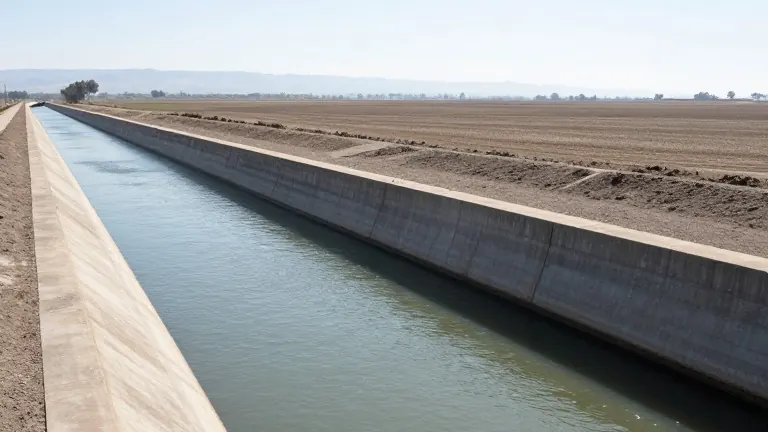
Governor-elect Xavier Becerra should prioritize flood and drought preparedness while protecting the state's aging water infrastructure, according to a new report. The document, titled Priorities for California's Water: Advice for the Incoming Governor, argues that the current system is vulnerable to extreme weather, excessive pumping, and deferred maintenance.
Kurt Schwabe, a public policy professor at UC Riverside and co-author of the report, stated that the state's conveyance system is designed for 19th-century conditions. He noted that both storage and transport capacity are currently undersized, leaving the state unable to mitigate increased risks of floods or droughts.
An immediate concern is the sinking land in the Central Valley caused by groundwater extraction. This subsidence breaks canals in the State Water Project, reducing the volume of water that reaches farms and cities. Schwabe emphasized the need to prevent further structural damage in the short term to maintain delivery capacity.
Geography complicates the state's water management. Approximately 75% of California's water supply originates north of Sacramento, while about 75% of demand is located to the south. The state relies on nearly 1,500 dams and a vast network of canals to move water, much of which was built during an era of more predictable Sierra Nevada snowfall.
The report identifies disaster preparedness as the most urgent priority. Since 2012, three major floods have resulted in roughly $8 billion in economic damage and 29 deaths. Despite this risk, only 7% of at-risk households carry flood insurance. The authors recommend updated protection standards, clearer emergency authority, and better evacuation planning.
Groundwater protection is the second priority. California draws about 40% of its water from underground aquifers. Continued subsidence could reduce the State Water Project's long-term delivery capacity by up to 87% over the next 20 years. The report calls for stronger enforcement of the Sustainable Groundwater Management Act and streamlined permits for underground storage.
Finally, the study urges long-term investment in storage and delivery systems. Schwabe compared the current canal network to a tiny straw trying to move large volumes of water. He advocated for expanding reservoirs and restoring forests and wetlands to slow runoff and improve water quality.
More Business · Bad Service · Report a business · Got a Story?