Trump switches to telerallies for final week of midterms
The president cancelled in-person events in Iowa and Kansas to conduct a 72-hour phone campaign across nearly 20 states.
By Andres Smirnov ·
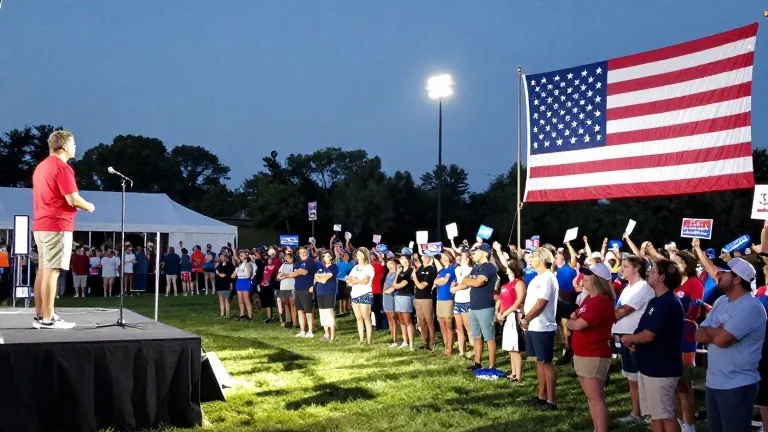
President Donald Trump canceled scheduled rallies in Iowa and Kansas on Thursday, shifting his final week of campaigning to telerallies. The Republican National Committee announced the change on Thursday evening, stating that the format would allow the president to address voters in nearly 20 states simultaneously. This strategy replaces in-person appearances in Topeka, Kansas, and the Des Moines, Iowa, suburbs with a 72-hour sprint of phone-based events.
The move follows a visit to Rock Hill, South Carolina, where Trump campaigned for Senate candidate Darline Graham. This marks his second trip to the state in one month, reflecting concerns about her ability to defeat Democrat Annie Andrews. Graham, who was appointed to the seat in July following the death of her brother, Senator Lindsey Graham, has struggled to build a national profile. Andrews, a pediatrician, is urging voters to try a new approach in a race where the state has not sent a Democrat to the Senate in three decades.
Internal sources indicate the campaign team is feeling optimistic about Republican prospects, particularly in Kansas. They believe Senator Roger Marshall is positioned well against Democratic challenger Adam Hamilton. The switch to telerallies means Trump will deliver shorter speeches, approximately 10 minutes, compared to the 90-minute addresses typical of in-person rallies. The president denied that illness was the reason for the change, stating he is not traveling to Kansas because Marshall is performing well.
Context for the shift includes tight contests in Texas, Ohio, and Alaska. In Alaska, the Justice Department issued grand jury subpoenas related to an investigation into the Democratic Senate campaign. The probe stems from reports that the campaign recruited a candidate with the same name as Republican incumbent Dan Sullivan. Trump called the situation a conspiracy and questioned whether Democrat Mary Peltola would be seated if she won. Peltola's campaign described the media report as a distraction from issues such as the war in Iran.
In other races, Democrats in Iowa are optimistic about the governor’s race. Nominee Rob Sand told supporters in a Des Moines suburb to avoid post-election regret by maximizing voter turnout before November 3. He acknowledged that winning could result in a divided government, which he said would likely disappoint both political extremes. In South Carolina, some Republican voters expressed lukewarm support for Graham, with one resident noting she is on the party ticket but admitted his enthusiasm was limited.