Brazilian Election: Lula Claims Fourth Term After Chaotic Polling Extension
Luiz Inácio Lula da Silva defeated Flávio Bolsonaro by 4.4 million votes, a result that leaves the region's largest economy independent of Washington despite regional political shifts.
By Evelyn Ellis ·
The outcome of Brazil's presidential runoff was announced on Sunday, confirming a victory for the incumbent president who has publicly criticized U.S. leadership. This result maintains a degree of autonomy for Latin America's largest economy from Washington, despite increasing pressure from American trade policies.
Brazil's electoral court reported that Luiz Inácio Lula da Silva secured 51.8 percent of the total vote, establishing a lead of nearly 4.4 million votes over his opponent, Flávio Bolsonaro. The confirmation of these numbers ended a night marked by logistical disruptions and last-minute legal maneuvers that affected the counting process across the country.
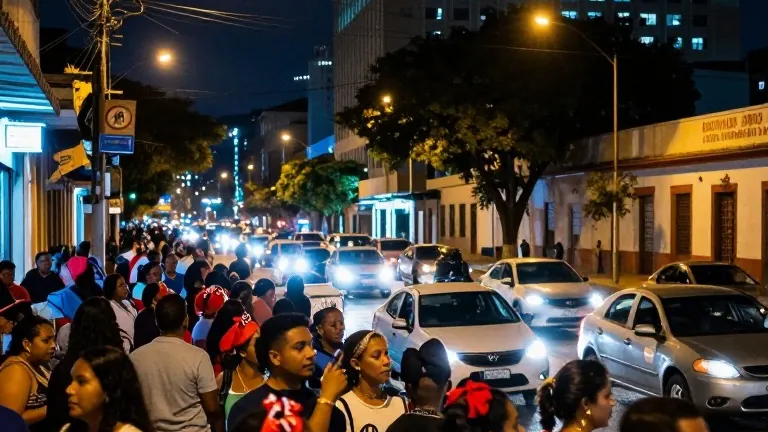
The chaos stemmed from a ruling by Supreme Court Justice Cristiano Zanin, who ordered polling stations to remain open for two additional hours just three minutes before the scheduled closing time. Lula requested the extension due to transportation issues in São Paulo and Salvador, while Bolsonaro cited heavy rains in the southern region. It remains unclear how many stations actually remained open past the original deadline, and Bolsonaro has stated he intends to request that the election be annulled over this decision.
Lula, who turns 81 on Tuesday, addressed his supporters by calling the result a defeat for denialism and lies. He pledged to respect all Brazilians regardless of gender or religion and emphasized the nation's sovereignty. "This country will not accept being anyone's backyard," he said. The victory buckes a recent trend in Latin America where right-of-centre leaders aligned with Donald Trump have gained power.
The win places the $2.6 trillion economy under a leader who has resisted the increased tariffs imposed by the U.S. president. It leaves Mexico and Brazil, the two most populous nations in the region, governed by left-of-centre leaders. In Rio de Janeiro, supporters in red celebrated the result, while critics pointed to the financial markets' reaction to the first-round results, where Bolsonaro had led.
Flávio Bolsonaro, who had previously outpolled Lula by more than 2.2 million votes in the first round, had not yet responded to the final tally. The election represents the first time since 1985 that the second-highest vote-getter in the initial round won the presidency. Bolsonaro focused his campaign on security and food costs, while Lula invested in incentives to attract undecided voters and younger demographics.
Both candidates face scrutiny regarding corruption involving family members and allies. Bolsonaro is implicated in a current investigation, while Lula served more than a year in prison on convictions that were later annulled. Lula began his political career in the 1970s as a union leader and founded the Workers' Party. He was re-elected in 2006 and served again after a brief interruption caused by his imprisonment and the impeachment of his successor, Dilma Rousseff, in 2016.
Lula was released from prison after 580 days following a Supreme Court ruling that found bias in the judge who convicted him. He narrowly defeated Jair Bolsonaro in 2022. He now joins Donald Trump and Nicaraguan President Daniel Ortega as the oldest sitting presidents in the Americas. The next term begins on January 5, 2027.