Serbia Faces Economic Deadlines
New leaders must manage expiring US waivers on Russian oil, a Chinese-built Expo, and frozen EU funds before year-end.
By Evelyn Ellis ·
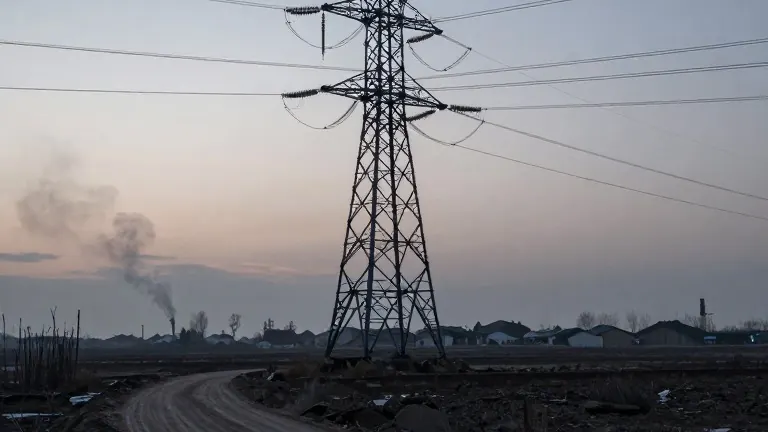
The US waiver allowing Russia’s NIS Group to operate Serbia’s only oil refinery expires on December 11. This deadline creates immediate pressure for the new parliamentary majority, which won a landslide election in October but has not yet named a prime minister. The Student List, the winning opposition group, faces a tight schedule to stabilize the economy while addressing long-standing questions about foreign influence.
NIS is majority-owned by Russian energy giant Gazprom. Washington imposed sanctions on the company following Russia’s 2022 invasion of Ukraine. Production stopped last year until waivers allowed the company to continue operations. A deal is currently being negotiated for Gazprom to sell its stake to Hungary’s MOL. Hungarian Foreign Minister Anita Orban said on November 5 that a deal could be completed by the December deadline. Vuk Vuksanovic, a foreign policy lecturer at King’s College London, warned that if the waiver is not extended, it would cause a complete economic shock at the start of the new government.
Serbia also relies heavily on Russian gas imports, which cover about 90 percent of the country’s needs. The current three-month supply deal expires at the end of this year. Former President Aleksandar Vucic stated on social media that the latest deal costs 318 euros per 1,000 cubic liters, compared to market prices near 900 euros. Student List leaders indicated this dependency is likely to persist, as Serbia is not in a position to cut ties with a major economic power.
Chinese involvement in Serbian infrastructure presents another complex challenge. Chinese companies built the Novi Sad railway station, where a fatal roof collapse sparked the protests that led to the Student List’s victory. Ilija Srdanovic, the lead candidate for the Student List, said the party has no insight into what was signed or whose interests it served. Chinese firms are also working on the Belgrade subway and the Expo 2027 complex, which is scheduled to open in May. Vuksanovic noted that many viewed the Expo as a key project under Vucic’s rule, so it will face close scrutiny.
China is Serbia’s second-largest investor, with nearly 8 billion dollars invested since 2010. Vucic made a state visit to China in May and returned with promises of 1 billion dollars in new investments. Bartosz Kowalski, an associate professor of Asian studies at Lodz University, believes the change will not be dramatic given how deeply China is entrenched in Serbia’s economy. He added that the shift will test the standalone value of these investments without the direct political umbrella of the previous administration.
Access to European Union funding is also at stake. The window for accessing payments from the EU’s Growth Plan for the Western Balkans closes at the end of next year. The plan makes 6 billion euros available to candidate states over the period from 2023 to 2027. A European Commission report released on November 4 noted that 167.6 million euros had been released to Serbia so far. Further payments were frozen earlier this year after judicial reforms were viewed by Brussels as democratic backsliding.
The EU is Serbia’s biggest trading partner. Srdanovic has committed the Student List to EU integration, but accession talks have been stalled for years. Xaviereff, a research fellow at the German Council on Foreign Relations, suggested that unlocking the Growth Plan funds would be lower-hanging fruit for the new government. He predicted the relationship with Europe would be a gradual process of establishing new communication rather than a full reset. The Student List, like Vucic, has stated it will not recognize Kosovo as an independent state, which remains a key item for Brussels.