Serbia faces slow shift in foreign policy after Vucic exit
Analysts predict internal reforms will delay changes in relations with neighbors and global powers despite the end of 14 years of SNS rule.
By Andres Smirnov ·
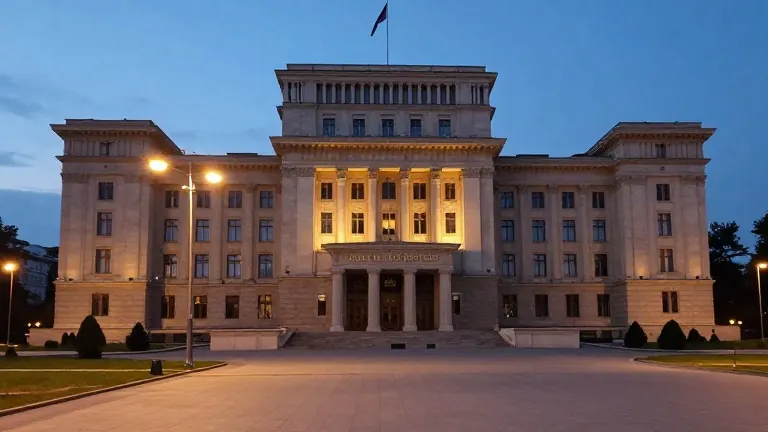
Ordinary citizens in Serbia face a transition period focused on domestic cleanup before any major changes in foreign policy. The opposition Student List won Sunday's election, ending 14 years of rule by Aleksandar Vucic and his Serbian Progressive Party. This historic victory has raised questions among international observers about whether Belgrade will quickly pivot toward the West.
Vucic and the SNS held power from 2012 until Sunday. The party's dominance was built on controlling democratic institutions, the judiciary, and media outlets. The new government must now address these internal structures before engaging with regional issues. This sequence of events suggests that immediate shifts in Serbia's external posture are unlikely.
Aleksandar Popov, director of the Centre for Regionalism in Novi Sad, stated that questions about relations with neighbors will not be on the immediate agenda. He noted that the outgoing regime undermined ties with Bosnia and Herzegovina, Croatia, Montenegro, and Kosovo. Popov explained that the new authorities must first fix the judiciary, police, and media sectors before solving problems with adjacent states.
Relations with Croatia remain tense due to frequent sharp words between the two governments. Vucic recently accused Zagreb of organizing a color revolution during mass protests in Serbia. Popov described the previous system as functioning on the production of internal and external enemies. He noted that while public hostility exists, both Belgrade and Zagreb held quiet agreements on the structure of Bosnia and Herzegovina.
Vuk Vuksanovic, a lecturer in foreign policy at King's College London, predicted that foreign policy will change the least among all areas of public policy. He stated that many international and domestic structures shaping Serbia's foreign relations will remain in place. Vuksanovic noted that Moscow never fully trusted Vucic but viewed him as a familiar figure. He added that the new government is unlikely to adopt a hawkish stance toward Russia overnight.
Serbia will likely maintain its policy of not recognizing the annexation of Crimea and Donbas. However, the future of ammunition deliveries to Ukraine remains uncertain. The opposition viewed Vucic's weapons sales to Kyiv as a tactic to buy Western tolerance for his domestic rule. Vuksanovic asserted that Serbia still needs preferential gas prices from Russia and that parts of the public remain disillusioned with the West.
Bosko Jaksic, a foreign policy analyst, said ties with Israel will not be severed but will face scrutiny. The new government plans to re-examine contracts concerning Serbian ammunition exports and Israeli surveillance equipment. Jaksic noted that Serbia's future stance may depend on the outcome of Israel's own elections. He suggested that the strategy of sitting on multiple chairs, which brought Serbia more harm than good, will be re-evaluated as Belgrade strengthens ties with the European Union.